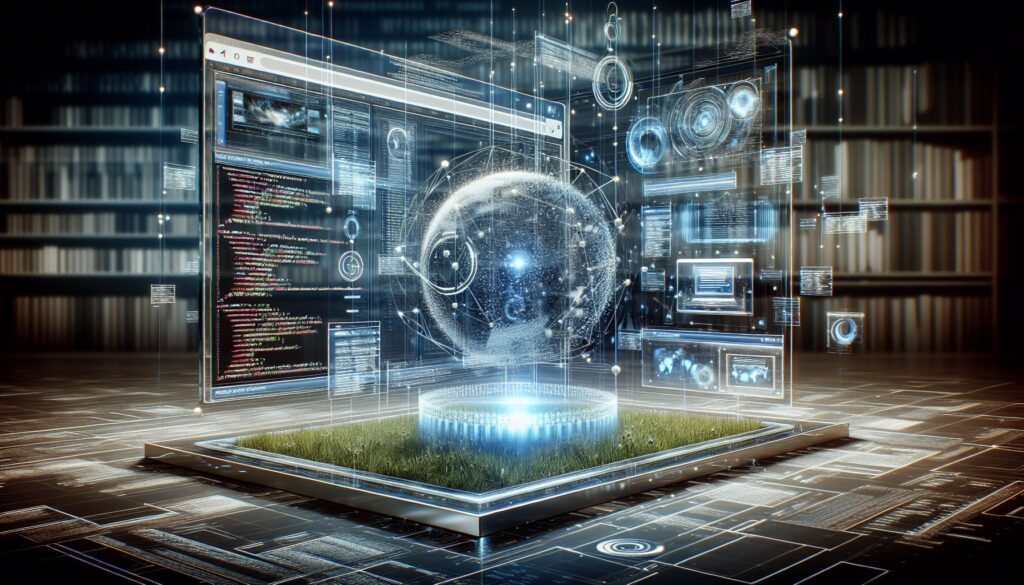

Artificial intelligence (AI) and machine learning algorithms have swiftly permeated various industries, revolutionizing everything from fin-tech to healthcare. Arguably, one of the sectors that has significantly benefited from AI is web design and development. What once was a heavy and complex process that necessitated deep technical skill sets can now be streamlined, thanks to AI-powered web design systems. They offer a rich blend of efficiency, customization, and cost-effectiveness, making them a vital component when crafting corporate websites. Further, these technologies powerfully connect web development with top-notch User Interface (UI) and User Experience (UX) design principles to spawn websites that don’t merely exist but perform.
AI in Web Design: Combining Art and Science
Historically, web design was an art, laden with creativity from designers. Today, with AI in the mix, it’s a superior blend of aesthetics and science. AI’s role, in essence, is more than an assistant to the designer; it’s more like a co-pilot piloting the design, layout, and features of a corporate website while considering the latest UI/UX design principles.
For instance, AI-based design systems leverage existing vast data and sophisticated algorithms to predict and implement design trends that resonate with your target audience. They capture the browsing habits, preferences, and behaviors of users, enabling a personalized design and interface that caters to the corporate clientele specifically.
Moreover, such AI platforms deliver a consistent experience across different devices, keeping the UI/UX consistent, whether a user is accessing the corporate site on a laptop or a mobile device. A one-size-fits-all approach no longer suffices in the era of customized experiences, and AI is critical in championing this shift.
Impact on Cost, Efficiency, and Time-to-Market
One of the most significant advantages of using AI in website development is the time and cost savings. Earlier, a team of developers and designers would hunker down for weeks, or even months, to develop a corporate website. AI can now accomplish this task in a fraction of that time, with minimal human intervention. The proficiency of AI significantly reduces the need for professional coding and design, leading to lower costs.
AI-driven design platforms also offer an avenue for rapid prototyping. Businesses can swiftly create design mock-ups, test, and reiterate until they hone in on a version that optimizes overall user experience. This agility significantly speeds up the time-to-market, allowing corporations to stay ahead of their competition.
The Human-AI Blend: The Future of Web Design
Yet, it isn’t just about replacing human designers and developers with AI; it’s about the convergence of human creativity with AI capabilities. The idea is never to entirely eliminate the human factor from web design. Instead, by handling mundane, repetitive tasks, AI frees designers to be more creative and innovative.
Seamless UI/UX designs are about creating a profound connection between the user and the website. Understanding this connection, quantifying it, and then designing experiences around it is a challenging task. It’s where the blend of human creativity, intuition, and AI algorithms excel, elevating corporate websites to a higher level of interaction and engagement.
Conclusion
The growing use of AI in web design is pushing the boundaries of what corporate websites can achieve. From embracing a co-pilot role in website design that boosts efficiency and saves time to enhancing UI/UX design principles for improved customer experiences, AI is reimagining website design. It’s not about completely outsourcing the role of the web designer to an AI algorithm. Instead, AI aims to aid and augment their capabilities, sharpening their design intuition, and helping to create more potent, meaningful experiences for users. For corporations, embracing AI in their web design strategies can lead to significant benefits, both in terms of customer impact and cost savings.
As we continue to evolve with AI, we must remember that these technologies are tools designed to boost our ingenuity and creativity. The future of corporate web design is a combination of human creativity and AI proficiency, creating designs that are not only visually stimulating but also deliver a personalized user experience. In this era of digital transformation, AI-driven web design is undoubtedly the way forward for corporations.